Your web browser is out of date. Update your browser for more security, speed and the best experience on this site.

Update your browser
CapTech Home Page

Articles January 26, 2026

2026 Tech Trends: The Only Constants Are AI and Change

CapTech
Author
CapTech

Executive Summary

AI is breaking the tech trend hype cycle.

AI is now the foundation for all modern technology. It isn’t overhyped. It’s underutilized. Make the shift from “Can we use AI?” to “How should our business change by using AI?”

Jump to this trend
Getty Images 1350722246 2

Humans are in the loop or in the way.

The future of innovation hinges on whether people act as catalysts for AI or block its potential. View AI as an opportunity to rethink how teams collaborate, learn, and create value together.

Jump to this trend
Getty Images 1059088668

AI is making automated experiences more natural.

AI has the power to make customer interactions less transactional and more relational. Cultivate more human‑centered customer experiences at a scale impossible for humans alone.

Jump to this trend
Getty Images 1348235096

AI is giving rise to the prototype economy.

AI empowers teams to move from idea to prototype to product in real time. But speed comes with its own risks. Ensure AI is used not only for speed, but also for impact.

Jump to this trend
Getty Images 2155090853 2

2026 Technology Trends: The Only Constants are AI and Change

Download PDF

In 2026, the question isn’t what’s next in tech but what’s next in AI.

For the foreseeable future, every trend in technology will be driven by AI. Today, organizations face a new reality: AI is no longer a differentiator, but a baseline expectation for organizations seeking to innovate and compete.

The real challenge is whether leaders are ready to rethink how work gets done, how decisions are made, and how value is delivered in a world where AI is a driving force of business. The very future of innovation depends on executives’ ability to lead people through this transformation.

To succeed, organizations must learn how to empower people to adapt, build trust in AI experiences, and embrace a culture of fast-paced experimentation and intentional change. The pace of innovation is no longer dictated by technology but by the speed at which leaders and teams can adapt to the new challenges and possibilities of AI.

Getty Images 2161298305

Trend One

AI is breaking the tech trend hype cycle.

For decades, tech trends have followed a predictable pattern: an initial surge of hype as everyone races to gain an early advantage, followed by a dip when reality tempers expectations. The Gartner Hype Cycle has long defined this journey: excitement peaks, disillusionment sets in, and eventually the technology climbs again to maturity as true value and use cases emerge. 

But AI is breaking that cycle and eclipsing all other tech trends. AI is now the foundation for all modern technology, and it is fundamentally reshaping innovation as new capabilities emerge month after month. While some applications of AI falter without a strategy, the technology itself continues to climb. 

In recent years, technology leaders have chased the latest AI innovations, often prioritizing novelty over necessity. But AI advancement is outpacing organizations’ ability to apply it. Now, with unclear use cases, an impossible speed of innovation, and failing ROI from current AI investments, executives are finding themselves in what feels like the “trough of disillusionment.” But this isn’t a normal cycle where technology fails to live up to the hype. Instead, people are preventing widespread success.

The illusion of disillusionment stems from organizations chasing hype, not value. AI isn’t overpromised. It’s underutilized. The challenge isn’t whether AI can deliver; it’s whether organizations can harness its potential, adapt to its constant evolution, and lead in a world where AI is foundational. 

AI isn’t just changing software engineering; it’s fundamentally changing the end-to-end processes we have known to be tradition. Previous technology trends such as mobile and cloud impacted certain parts of the lifecycle, but AI is changing all processes, from ideation to delivery.

G E O (Generative Engine Optimization) 


Beyond traditional Search Engine Optimization (SEO), the rise of Generative Engine Optimization (GEO) marks a significant shift in consumer behavior. As consumer discovery phases move from search engines to AI chat interfaces like ChatGPT, brands must now optimize content and answers for Large Language Models (LLMs) to improve findability and conversion.

Consumer Pushback 


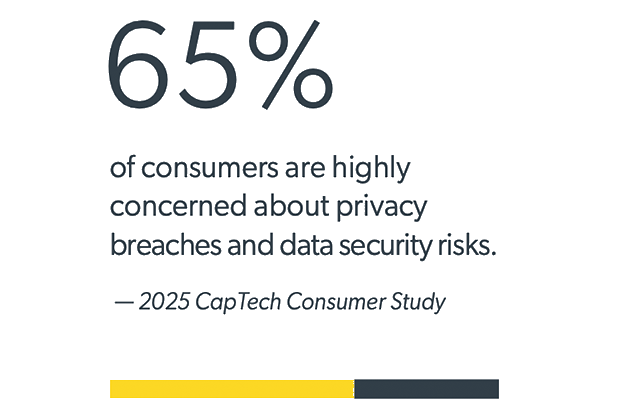
Privacy concerns, environmental consequences, plagiarism, and harmful use cases, like AI-generated images and deepfake videos, have left consumers wary of AI. According to CapTech’s 2025 Consumer Study, less than a third of consumers trust AI to make decisions in their best interest. Read how brands can overcome this hurdle in CapTech’s Consumer Survey Report.

Generative AI Industry Spotlight

In Healthcare: Generative AI is transforming healthcare workflows by securely generating clinical summaries, personalizing patient content, and converting unstructured data into structured insights, which impacts patient experience, clinical care, and operations. It delivers scalability and speed, while embedding governance through bias monitoring and protected health information (PHI) masking. Not just a passing trend, AI is becoming the backbone for both clinician- and patient-facing experiences.

In Sports: Generative AI is changing the game of rules and regulations. AI-powered rulebooks now dynamically generate plain-language explanations of complex rules, adapting in real time to the needs of athletes, coaches, officials, and fans. By delivering context-specific guidance during each play and review, these systems ensure that every stakeholder feels confident and informed.

In Financial Services: Generative AI tools are autonomously crafting and executing simulated cyberattacks, adapting in real time to mimic evolving threat tactics. By generating new attack vectors and rigorously testing system defenses, these AI-driven “red teams” help organizations uncover vulnerabilities before hackers do. At the same time, GenAI with agentic capabilities is automating the orchestration of security workflows, like triaging alerts, generating incident reports, and recommending remediation steps. Together, these capabilities are redefining how financial institutions proactively defend against threats.

The Trend is Clear: Organizations are shifting from “Can we use AI?” to “How should our business change by using AI?”

Trend Two

Humans are in the loop or in the way.

The most formidable barrier to AI innovation is not the technology itself, but the people who adopt, govern, and implement it. The future of AI innovation hinges on whether people act as catalysts for AI or block its potential. 

While AI systems excel at speed, scale, and automation, they still lack the nuanced judgment, ethical reasoning, and contextual understanding that humans provide. Humans in the loop ensure accountability, accuracy, and adaptability, turning algorithms into trusted partners rather than unchecked engines. 

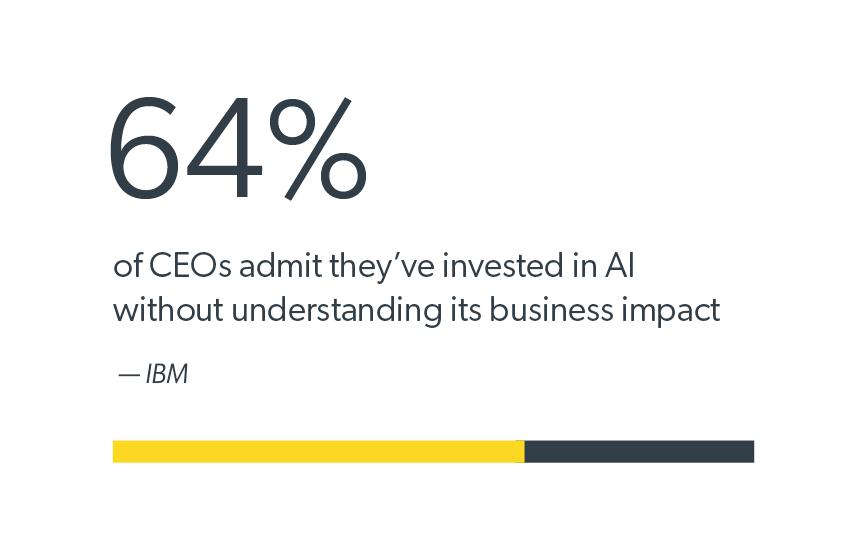
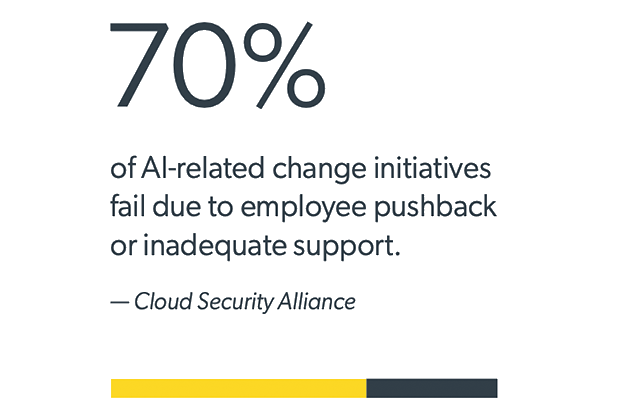
As AI evolves, so will the role of the human in the loop. But all too often, we’re not getting humans in the loop. We’re getting humans in the way. Lagging employee adoption, consumer distrust, ineffective change management, and compliance paralysis are barriers that stall AI transformation and undermine its success. Explore more in our 2025 Executive Report and 2025 Consumer Study. 

AI is an amplifier. It magnifies both strengths and weaknesses within teams and across entire organizations. With AI, solid foundations become stronger, and existing dysfunctions become more pronounced.
The Democratization Risk


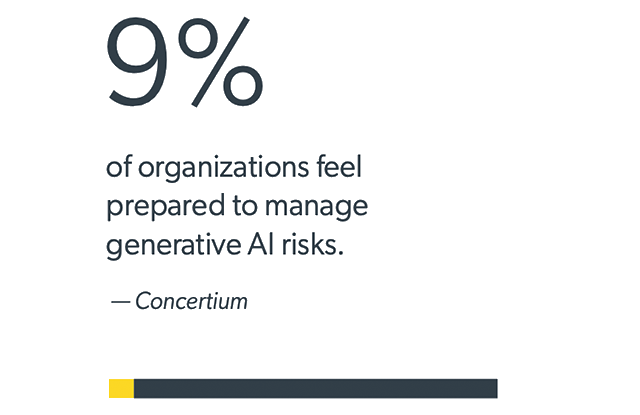
With the rise of accessible AI tools, business teams are now able to build and deploy solutions without deep technical expertise. However, this rapid democratization can create problems if support and governance don’t keep pace. Cross-team quality control is becoming even more critical to ensure AI delivers value without generating tech debt or compromising reliability. 

The way forward? Organizations must implement AI as a human-centered tool for empowerment. Automating tasks to reduce the workforce isn’t the goal of AI. Instead, AI should present an opportunity for teams to rethink how they collaborate, learn, and create value together. This means, instead of forcing AI and expecting positive results, meeting staff where they are on their AI adoption journeys and helping them navigate the impact of AI on their current jobs.

As AI reshapes the workplace, organizations must move beyond traditional change management and empower employees to actively shape their roles. Job crafting invites individuals to redesign aspects of their work, from daily tasks to relationships and even their sense of purpose. This approach is especially critical as AI automates routine functions, freeing people to focus on higher-value, creative, and strategic contributions. 

By encouraging job crafting, organizations can turn potential resistance into engagement. Employees become co-creators of their future, adapting their roles to leverage AI as a tool for growth rather than a threat to job security. The most successful AI transformations are not those that simply “add humans to the loop,” but those that empower people to reimagine their work, aligning personal strengths and aspirations with organizational goals. In this way, job crafting becomes a catalyst for innovation, resilience, and sustained value creation in the AI era.

Customer Service Agents

With AI automating routine inquiries, customer service agents are shifting their focus to building deeper client relationships and delivering personalized engagement.

Data Analysts

As AI handles data processing, data analysts are evolving into strategic advisors who interpret insights and guide business decisions.

Creatives

With AI streamlining technical execution, writers and designers are becoming product owners and focusing their creative expertise on driving faster innovation cycles with more rapid ideation, iteration, and strategic direction.

Agentic AI & Anomaly Detection Industry Spotlight

In Financial Services: Agentic AI is augmenting trade surveillance by surfacing anomalous patterns across orders, trades, and communications, then orchestrating investigation workflows for compliance teams. Rather than replacing analysts, these systems prioritize signals, summarize context, and recommend next steps, reducing manual triage while preserving human judgment over escalation and remediation. Combined with proactive threat hunting, firms strengthen controls, improve coverage, and accelerate response.

In Healthcare: Agentic AI deploys autonomous task agents to manage complex workflows such as prior authorization and scheduling, surfacing anomalies and orchestrating resolution steps for clinical and administrative teams. Rather than replacing staff, these systems accelerate throughput and lower operational costs while maintaining human oversight to ensure compliance and accuracy in patient care.

In Private Equity: Specialized agentic AI scans and maps legacy systems, identifying endpoints, integrations, and vulnerabilities, then orchestrates tasks like API discovery and configuration analysis. Anomalies and critical findings are escalated to human experts for review, enabling teams to validate risks, optimize costs, and guide strategic decisions with confidence.

Trend Three

AI is making automated experiences more natural.

Contrary to the fear that automation strips away empathy, the effective application of AI is actually making customer experiences feel more human than ever. (“Effective” being the operative word.)

Agentic systems over the past year have started being robust “task masters” that automate individual tasks faster or with more precision. As agentic systems evolve towards being more outcome-driven or goal-oriented, organizations have the opportunity to cultivate more human-centered customer experiences. Ultimately, the more advanced AI becomes in shaping consumer experiences, the less noticeable the technology will be to the end user, and the more natural it will feel. 

What truly resonates with customers is not only speed or convenience; it’s the feeling of being understood. AI is transforming today’s customer experience by creating interactions that feel less transactional and more relational. Intelligent systems can detect frustration, urgency, or delight in real time, allowing brands to respond with empathy and reassurance.

AI Industry Spotlight

AI-Enhanced Digital Platforms

In the Public Sector: State agencies are leveraging AI-powered digital experience tools combined with conversational AI interfaces to create an integrated platform that streamlines eligibility determination, state benefits enrollment, and access to care options. By combining predictive insights, secure interoperability, and multilingual virtual assistants, this approach results in a more intuitive, accessible user experience that also reduces administrative costs.

AI-Powered Document Intelligence

In the Public Sector: Government agencies automate document intake and validation for permits and licensing, transforming paperwork into streamlined digital flows. By combining Optical Character Recognition (OCR), Named Entity Recognition (NER), and automated policy checks, AI reduces red tape and improves decision accuracy, delivering faster, more natural constituent experiences.

In Private Equity: AI automates ingestion of Confidential Information Memorandums (CIMs), contracts, and operational documents using Optical Character Recognition (OCR), Named Entity Recognition (NER), and clause or attribute extraction. The system normalizes Key Performance Indicators (KPIs), accelerates covenant checks and redlining, and surfaces discrepancies for expert review, reducing cycle time while keeping the experience seamless for deal teams.

AI-Driven Personalization Engines

In Financial Services: Financial institutions are leveraging AI-driven personalization engines to recommend products and offers tailored to individual customer profiles, increasing engagement and boosting conversion rates through more relevant, natural interactions. These systems also provide sales teams with real-time recommendations and talking points during client conversations, enabling more personalized and effective relationship building.

In Sports: Organizations are employing AI to personalize every stage of the fan journey, from ticketing to in-game experiences, and beyond. This real-time personalization drives loyalty and creates new revenue streams by making each interaction feel uniquely tailored and engaging.

Trend Four

AI is giving rise to the prototype economy.

Companies expect faster ROI, and consumers expect immediate value. In 2026, the demand for rapid prototyping and accelerated product development cycles will skyrocket. The prototype economy is transforming how organizations innovate, driven by the relentless pace and possibilities of AI. 

Because previous product development lifecycles took time to create and deploy, there was a natural bias towards staying with previous investments as people invested significant effort in the process. As these time cycles diminish and the pace of creation increases, teams can throw away what’s not working and start fresh. The prototype economy frees us from our previous investment bias as the effort to create new is dramatically reduced.

The Velocity Trap


The relentless pace of AI- driven innovation empowers teams to move from idea to prototype in record time, but speed comes with its own risks. When organizations prioritize rapid development above all else, they may sacrifice thoughtful design, thorough testing, or strategic alignment. This velocity trap can lead to a proliferation of prototypes that never mature into scalable solutions, or worse, introduce instability and tech debt into the business.

This environment encourages experimentation and creativity but also makes organizations vulnerable to the velocity trap. To truly benefit from the prototype economy, leaders must remain intentional, focusing on purpose-driven initiatives that align with business needs and leveraging AI not just for speed, but for strategic, impactful innovation.

Hyper-Sprints

AI-powered hyper-sprints are radically accelerating product development cycles. What once took weeks can now be accomplished in half a day. Teams are expected to deliver working prototypes within hours, not months, meeting the demand for faster ROI and immediate value. 

Accelerated Design & Iteration 

AI enables organizations to rapidly design, test, and refine potential solutions. This isn’t limited to creative and engineering roles. Across the enterprise, teams can experiment, learn, and improve at a pace previously unimaginable. The ability to iterate quickly means ideas can evolve faster, and only the most promising concepts move forward. 

Rapid Demos

Organizations can now build and showcase fully functional AI demos in just a day or two, providing stakeholders with tangible proof-of-concept models. These rapid demos help decision-makers visualize potential solutions early, accelerating alignment and buy-in while reducing the risk of investing in unproven ideas.

Prototype Economy Industry Spotlight

Predictive Analytics & AI Risk Modeling

In Healthcare: Hospitals are leveraging AI- driven supply chain monitoring in rapid pilot cycles, using predictive analytics to forecast asset needs and optimize inventory management. These accelerated, iterative approaches enable organizations to test and refine operational strategies, reduce costs, and enhance resilience.

In Energy & Natural Resources: Energy Companies are using predictive models in continuous test‑and‑learn loops to anticipate equipment failures and reprioritize maintenance in short iterations. Fast risk simulations cut downtime and costs without waiting for full rollouts. 

In Sports: Organizations are prototyping dynamic pricing strategies with demand forecasts, and running rapid A/B tests on unsold inventory to tune prices in real time, maximizing last‑minute conversion and filling more seats.

AI-Powered AR/VR

In Energy & Natural Resources: Energy Companies are equipping field technicians with augmented reality (AR) glasses powered by AI-driven computer vision. These tools provide real-time equipment identification and digital work instructions, enabling rapid onboarding, continuous upskilling, and faster troubleshooting. By accelerating workforce development and minimizing downtime, organizations can quickly pilot and scale new operational models.

Embracing the New Pace of Change

AI is not just another technology wave. It’s a catalyst that is fundamentally transforming how we work, collaborate, and innovate. Unlike past tech revolutions, where the challenge was simply to adopt new tools, today’s AI reality demands that organizations rethink their very processes, methods, and even the nature of business. 

Transformation is becoming a constant, not a variable. Leaders must move beyond reacting to disruption and become skilled at navigating continuous reinvention. Now, success isn’t just about keeping up with changing technology. It’s about mastering change itself.

Brian Bischoff

Principal, CTO

Brian leads our business strategy for our practice areas and is a thought leader in digital strategy. He provides an objective perspective through the strategic analysis of current technology trends and designs and builds great experiences for our clients.

LinkedIn Envelope
Bree Basham

Bree Basham

Principal, Go-to-Market & Growth Strategy

As Principal of CapTech’s Go-to-Market & Growth Strategy, Bree Basham leads our efforts to shape how we bring services, solutions, and stories to market—accelerating growth and deepening client impact. Drawing on a career that spans strategy, customer experience, and marketing, Bree brings a rare blend of creative vision and strategic discipline to CapTech’s growth initiatives.

LinkedIn Envelope